Semrush Keyword Tool
If you’ve been learning SEO, you’ve probably heard someone say, “Just use the Semrush Keyword Tool to find keywords.” It’s one of the most popular SEO platforms in the world, and for good reason. Millions of businesses, agencies, and marketers rely on it every day to discover keyword opportunities, analyze competitors, and improve their search rankings.
But here’s something many people don’t realize.
The Semrush Keyword Tool is excellent at providing data, but data alone doesn’t create a successful SEO strategy. Real keyword research begins when you understand your audience, your business goals, and the intent behind every search.
This guide explains how the Semrush Keyword Tool works, what it does well, where its limitations are, and how professionals use it to build long-term SEO success.
What Is the Semrush Keyword Tool?
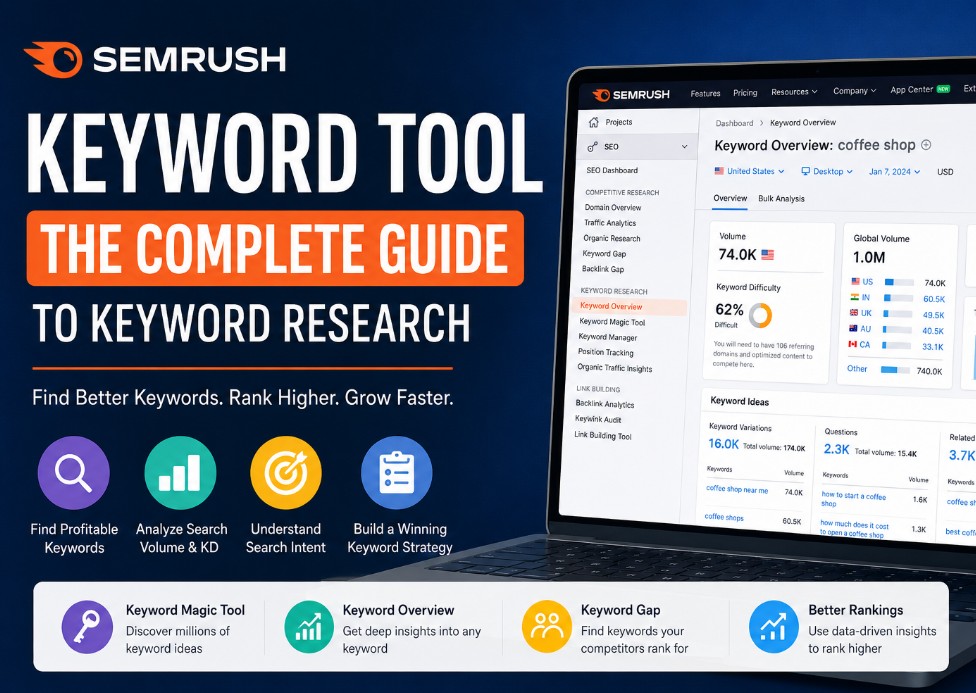
The Semrush Keyword Tool is part of the Semrush SEO platform that helps you discover keywords people search for on Google and other search engines. Instead of guessing what your audience wants, you can use real search data to understand which topics deserve your attention.
The tool provides useful information such as monthly search volume, keyword difficulty, search intent, related keywords, question-based keywords, SERP features, and competitor rankings. This information allows marketers to make smarter content decisions instead of relying on assumptions.
Whether you’re running a local business, an eCommerce store, or a service-based company, keyword research becomes much easier when you have access to this type of data.
Why SEO Professionals Trust Semrush
There are many keyword research tools available today, but Semrush has earned the trust of SEO professionals because it combines several powerful features into one platform.
You can discover thousands of keyword ideas, identify competitors’ top-performing pages, monitor keyword rankings, find content gaps, and estimate how difficult it might be to rank for a particular keyword.
Instead of using five different tools, many agencies complete most of their research inside Semrush.
However, experienced SEO professionals don’t simply export keywords and start writing content. They use the data as the foundation of a much larger strategy.
The Biggest Mistake People Make
One of the most common mistakes beginners make is assuming that keyword research ends after downloading a keyword list. But it doesn’t.
Finding keywords and building a keyword strategy are two completely different things.
For example, imagine Semrush shows that a keyword receives 8,000 searches every month. At first glance, it looks like a great opportunity. But after reviewing the search results, you realize people searching for that keyword are only looking for general information, not to buy a product or hire a service.
Now compare that with another keyword receiving only 300 searches per month. Those searchers are actively looking for a service provider and are ready to make a decision.
Which keyword has more business value? In many cases, the second one.
This is why experienced SEO professionals always analyze user intent before choosing keywords.
Search Intent Is More Important Than Search Volume
Search intent explains why someone performs a search.
-Some people want information.
-Some want to compare products.
-Others are ready to purchase.
Although Semrush helps identify search intent, it cannot decide which keywords match your business goals. That decision requires experience and strategy.
A successful keyword strategy balances search volume, competition, user intent, profitability, and business priorities.
Ignoring any of these factors often leads to disappointing SEO results.
Where Semrush Has Limitations
Semrush is an outstanding research tool, but it isn’t a replacement for strategic thinking.
– It doesn’t know which service generates your highest profit.
– It doesn’t understand which cities you want to dominate.
– It doesn’t know which customers are most valuable.
– It can’t decide how your website should be structured or which pages deserve the highest priority.
These decisions still require human expertise. That’s why successful agencies combine keyword data with business analysis instead of relying on software alone.
Modern Keyword Research Goes Beyond Keywords
– Google has changed dramatically over the past few years.
– Today, ranking a single page is no longer enough.
– Search engines evaluate how well your entire website covers a topic.
This is known as Topical Authority.
For example, if your business offers SEO services, publishing only one page about keyword research isn’t enough.
Supporting content such as search intent, technical SEO, competitor analysis, internal linking, topical authority, entity SEO, AI optimization, local SEO, and content strategy all work together to strengthen your authority.
Semrush can help you discover these opportunities, but organizing them into a logical content strategy is still your responsibility.
Don’t Forget AI Search
SEO is no longer limited to Google Search.
Today, content is also referenced by Google AI Overviews, ChatGPT, Gemini, Claude, and Perplexity.
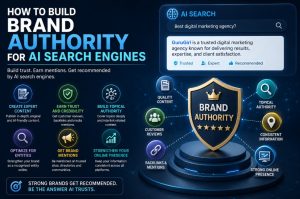
These AI platforms prefer websites that explain topics thoroughly, connect related content naturally, and demonstrate real expertise.
Simply inserting keywords into a page isn’t enough anymore.
Clear structure, semantic relationships, entity optimization, helpful content, and strong internal linking all contribute to better AI visibility.
How GuruGiri Uses the Semrush Keyword Tool
At GuruGiri, we use the Semrush Keyword Tool every day because it provides reliable keyword data and valuable competitor insights.
However, our process doesn’t stop there.
We combine Semrush data with user intent analysis, competitor research, topical authority planning, business-focused keyword selection, local SEO strategy, entity optimization, AI-friendly content planning, and internal linking.
Instead of creating random blog posts, we build complete topic clusters that help businesses grow sustainably over time.
This approach not only improves search rankings but also increases brand authority and AI visibility.
Final Thoughts
The Semrush Keyword Tool is one of the best keyword research tools available today, and every serious SEO professional should know how to use it.
But remember that it’s still just a tool.
Successful SEO doesn’t come from exporting keyword lists. It comes from understanding your audience, selecting the right opportunities, building topical authority, and creating content that genuinely helps users.
If you treat Semrush as the beginning of your keyword research process rather than the final solution, you’ll make far better SEO decisions and create a stronger foundation for long-term organic growth.
At GuruGiri, that’s exactly how we approach keyword research-combining data, strategy, and real business objectives to deliver sustainable SEO and AI growth.
About the Author
Rahamat Ali (Reza)- Founder & CEO, GuruGiri
Rahamat Ali (Reza) is a seasoned Organic Growth Strategist and the Founder & CEO of GuruGiri. He began his professional SEO journey in 2016 and has successfully completed more than 1,200 SEO projects through Fiverr, Upwork, direct international clients, and leading digital marketing agencies.
His expertise includes SEO, AI Optimization, Technical SEO, Entity-Focused Content Strategy, Topical Authority Building, Local SEO, Brand Authority, and long-term organic growth. Rather than focusing on short-term rankings, he helps businesses build sustainable online visibility that is recognized by both search engines and AI platforms.
Beyond client work, Reza is passionate about mentoring the next generation of SEO professionals. Through GuruGiri, he has trained and guided many successful students who have built rewarding freelancing careers and now work with clients worldwide.