How to Build Brand Authority for Google and AI Search Engines
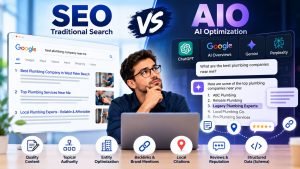
Search behavior is changing. People still use traditional search engines, but they are also asking questions through AI-powered search experiences and conversational assistants. Instead of reviewing ten search results manually, a user may ask for a direct recommendation, comparison, explanation, or shortlist. For businesses, this creates an important question:
How can a brand become easier for AI systems to understand and potentially reference?
There is no single switch that makes a company authoritative in AI search. The stronger approach is to build a clear, credible, and consistent presence across the web.
Start With a Clearly Defined Entity
AI systems need context. Your brand should therefore be easy to understand. Basic questions should have clear answers:
- What is the company called?
- What does it do?
- Which products or services does it provide?
- Where does it operate?
- Who is behind it?
- What topics does it specialize in?
- What is its official website?
This information should be clearly presented on your website and remain consistent across important third-party sources. If the internet contains contradictory descriptions of your company, understanding the brand becomes more difficult.
Build Real Topical Depth
Publishing a few disconnected blog posts is not the same as establishing expertise. Businesses should build content around the topics closely connected to their actual products or services.
For example, an SEO agency might develop interconnected resources covering:
- Technical SEO
- Local SEO
- Topical authority
- Brand authority
- Entity optimization
- AEO
- AI search visibility
- Content strategy
- Structured data
- Brand mentions
Each broad subject can then be supported by more specific articles. This creates topical depth rather than a collection of unrelated keywords. A broader brand authority framework for SEO and AI visibility can combine this content depth with reputation, mentions, reviews, entity consistency, and other external trust signals.
Make Content Easy to Understand
AI-friendly content should still be human-friendly content. Avoid writing awkward paragraphs simply to insert keywords.
Instead:
Use descriptive headings, Answer the primary question clearly, Explain technical concepts in straightforward language, Break complex subjects into logical sections, Use examples where they genuinely improve understanding, Provide specific information instead of vague marketing statements.
A reader should be able to understand the page even if they know very little about the topic beforehand.
Connect Related Content
Internal linking helps users move between related resources and shows how different topics on your website connect. A pillar page can introduce a broad subject while supporting articles explore individual aspects in greater depth.
For example: Brand Authority
→ Brand Authority vs Brand Awareness
→ Brand Credibility
→ Brand Mentions
→ Customer Reviews
→ Brand Authority for AI Search
The supporting pages can link back to the primary resource and to one another where contextually relevant. The result is a structured knowledge area rather than five isolated blog posts.
Build Third-Party Evidence
A company cannot establish strong authority entirely through statements on its own website. External sources matter for reputation. Relevant third-party evidence may include:
- Industry mentions
- News coverage
- Customer reviews
- Professional profiles
- Business directories
- Expert contributions
- Interviews
- Podcasts
- Partnerships
- Local citations
- Community references
These sources create an information footprint beyond the company’s controlled properties. The goal should not be to manufacture thousands of low-quality mentions. Focus on sources that make sense for the brand.
Strengthen Your Reputation
AI visibility and reputation should not be treated as separate strategies. If someone discovers your company through an AI-generated recommendation, they may still search your brand before making a decision.
What will they find?
Strong customer reviews?
Active professional profiles?
Useful content?
Consistent company information?
Relevant third-party references?
Or an almost empty search footprint?
Being mentioned is only part of the journey. Being credible after discovery is equally important.
Use Structured Data Appropriately
Structured data can help search engines understand certain information on webpages more explicitly. Depending on the site, relevant schema types may describe organizations, local businesses, products, services, articles, people, breadcrumbs, and other supported entities.
However, schema should reflect information genuinely present on the page. Adding excessive markup does not magically create authority. Think of structured data as supporting machine understanding—not as a replacement for content, reputation, or genuine expertise.
Keep Important Information Updated
Authority is not something businesses build once and forget.
Services change.
Employees change.
Locations change.
Statistics become outdated.
Old content can become inaccurate.
Regularly review important pages and update information when necessary.
Maintaining accurate resources sends a much stronger quality signal to human readers than allowing outdated pages to accumulate indefinitely.
Don’t Create Content Only for AI
One of the biggest mistakes businesses can make is trying to write exclusively for algorithms or AI systems.
The end user is still a person. If an article ranks, gets cited, or appears in an AI answer but fails to help the person who eventually visits the website, the strategy has missed its commercial purpose.
Content should first be accurate, useful, clear, and relevant. Optimization should make that information easier to discover and understand.
Build a Brand, Not Just a Website
Traditional SEO sometimes encourages businesses to think primarily about pages and keywords. AI-driven discovery makes a broader perspective increasingly useful. Think about the brand itself.
What topics is it known for?
Who talks about it?
Where is it listed?
What do customers say?
Which experts are associated with it?
Is its information consistent?
Does it contribute anything useful to its industry?
These questions extend far beyond traditional on-page optimization.
Final Thoughts
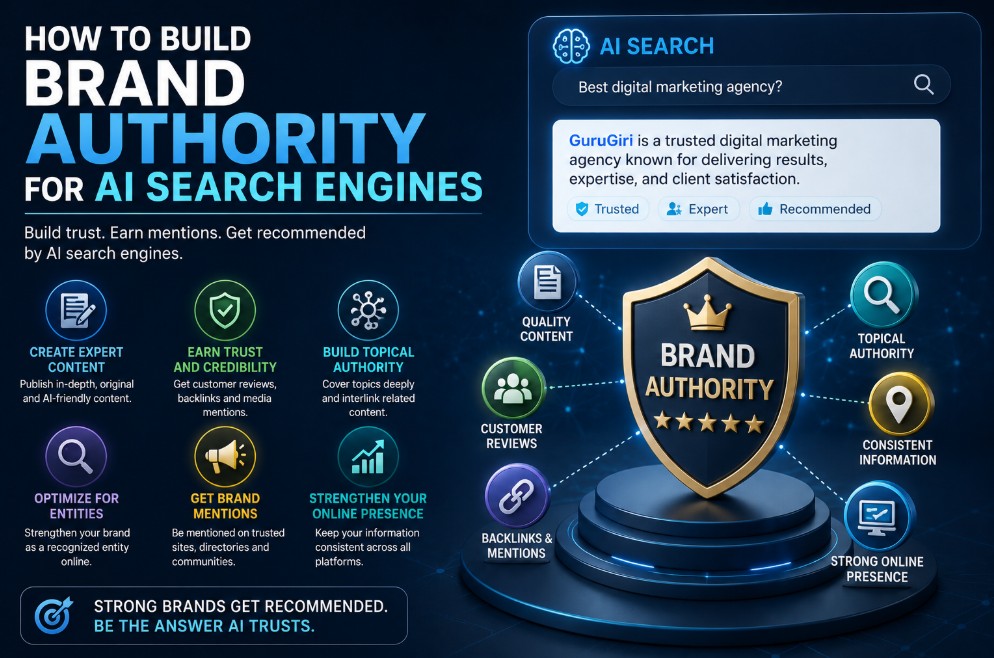
Building brand authority for AI search engines is not about finding one secret AI ranking factor. It is about creating a business that is easy to understand, consistently represented, genuinely knowledgeable, and supported by credible information across the web.
Develop topical depth on your own website. Connect related content logically. Maintain accurate entity information. Earn meaningful third-party mentions. Build genuine customer reviews. Use structured data appropriately. Keep your information current.
As search technology evolves, individual tactics will continue to change. But brands that establish real expertise, trust, relevance, and a strong digital footprint will be in a much better position to adapt.