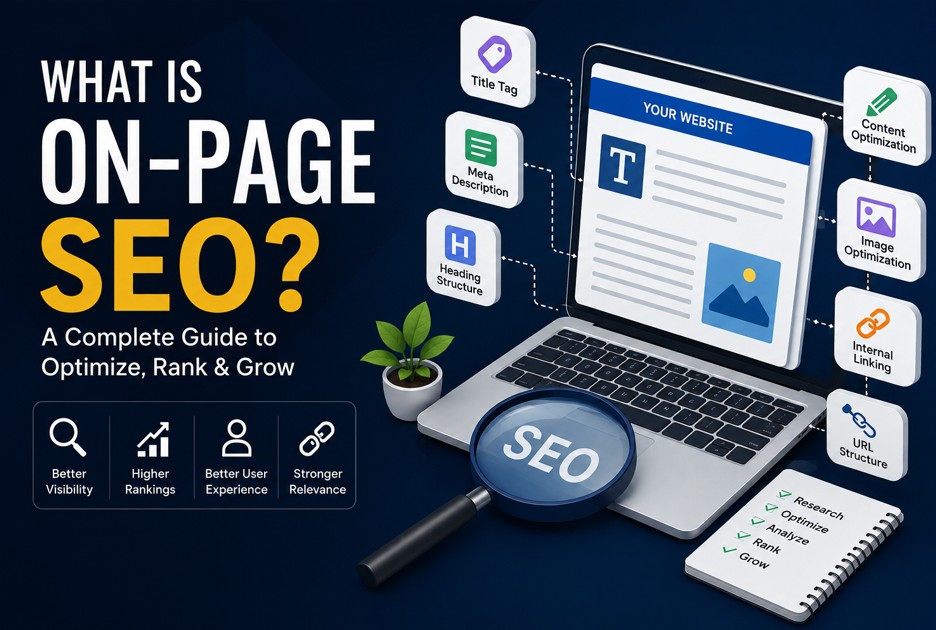
What Is On-Page SEO?
Many people believe that SEO begins by adding keywords to a webpage, writing a meta title, and publishing the content. While these tasks are important, they represent only one part of a much larger process. On-Page SEO is the practice of optimizing every element within a webpage so that search engines and AI-powered search systems can clearly understand its purpose, relevance, and value. It involves improving content quality, heading structure, URLs, internal links, images, metadata, user experience, semantic relevance, and many other factors that influence how a page performs in search results.
Today, search engines are far more advanced than they were a few years ago. They no longer rank pages simply because a keyword appears several times. Instead, they evaluate whether a page answers the user’s question, whether the content is trustworthy, how well it fits within the website’s overall topic, and whether users are likely to have a positive experience. That is why modern On-Page SEO focuses on creating useful, organized, and context-rich content rather than simply optimizing for keywords.
Why Is On-Page SEO Important?
A website may look attractive to visitors, but search engines see it differently. They analyze the structure, content, relationships between pages, loading speed, mobile usability, and hundreds of additional signals before deciding where a page deserves to rank. Without proper On-Page SEO, search engines may struggle to understand what your page is about, making it much harder to compete for valuable keywords.
On-Page SEO also improves the overall experience for users. Clear headings, logical content flow, descriptive URLs, optimized images, and relevant internal links help visitors find information more easily. When users stay longer, visit more pages, and engage with your content, search engines often interpret these signals as indicators of quality.
As AI-powered search continues to evolve, structured and semantically rich content is becoming even more important. AI systems rely on context, relationships between topics, and entity recognition rather than just keyword matching. Websites that are properly optimized are more likely to appear in AI-generated answers and modern search experiences.
What Should Be Done Before On-Page SEO?
Before starting On-Page SEO, it is important to complete several foundational tasks. Many websites fail to achieve good rankings because they begin optimizing pages without proper planning. Research and strategy should always come first, as they help ensure every optimization effort supports the overall business goals.
Business And Competitor Analysis
The first step is understanding your own business and analyzing your competitors. You should identify your target audience, business objectives, products or services, and the strengths and weaknesses of competing websites. This research helps uncover opportunities and creates a clear direction for your SEO strategy.
Website Audit
If the website already exists, a complete SEO audit should be performed before making any changes. An audit identifies issues such as broken pages, duplicate content, missing metadata, slow page speed, indexing problems, crawl errors, and weak internal linking. Fixing these issues early creates a stronger foundation for On-Page SEO.
Keyword Research
Keyword research is much more than finding search terms with high volume. It involves understanding search demand, competition, commercial value, and user intent. Selecting the right keywords ensures that every page targets the audience most likely to convert.
Search Intent Analysis
Every keyword has a purpose behind it. Some users want information, others are comparing services, and some are ready to make a purchase. Understanding this intent allows you to create content that truly satisfies users instead of simply matching keywords.
Topical Authority Planning
Rather than publishing random articles, plan your content around topic clusters. Your service pages, supporting blog posts, FAQs, case studies, and resource pages should work together to cover an entire subject. This approach helps search engines recognize your website as an authority in your industry.
Website Structure Planning
Before optimization begins, the overall structure of the website should be planned carefully. Categories, URLs, navigation, internal linking, and page hierarchy should all follow a logical structure. A well-organized website improves both user experience and search engine crawling.
Entity Research
Modern SEO relies heavily on semantic understanding. Instead of focusing only on keywords, identify the relevant entities related to your business, such as brands, services, products, locations, organizations, and important concepts. Including these naturally throughout your content helps search engines better understand the context of your pages.
Create An SEO Strategy
Once all research has been completed, combine the findings into a clear SEO strategy. Decide which pages should be optimized first, what content needs to be created, how internal links will be structured, and how authority will be built over time. A clear roadmap makes the On-Page SEO process more efficient and produces better long-term results.
What Happens During On-Page SEO?
Once the research and planning stages have been completed, the actual optimization process begins. During this phase, every important element of the webpage is refined to improve its relevance, usability, and visibility in search engines. The goal is to create pages that are valuable for users while making it easier for Google and AI-powered search systems to understand the content.
Title Tag Optimization
The title tag is one of the first things both users and search engines notice. It should clearly describe the page, include the primary keyword naturally, and encourage users to click without appearing spammy.
Meta Description Optimization
Although the meta description is not a direct ranking factor, it plays an important role in improving click-through rates. A well-written description summarizes the page and gives users a reason to visit your website.
Heading Structure
A clear heading hierarchy helps organize the content and improves readability. Using H1, H2, H3, and H4 headings correctly allows search engines to understand the relationship between different sections of the page.
URL Optimization
URLs should be short, descriptive, and easy to understand. Clean URLs improve user experience and make it easier for search engines to identify the topic of a page.
Content Optimization
Content should be written for people first, not search engines. Instead of repeating keywords, focus on answering users’ questions, covering related topics naturally, and providing useful, trustworthy information.
Internal Linking
Internal links connect related pages across the website. They help users discover more valuable content while allowing search engines to understand the relationship between different pages and distribute authority throughout the site.
Image Optimization
Images should be optimized with descriptive file names, meaningful alt text, appropriate dimensions, and compressed file sizes. This improves page speed, accessibility, and image search visibility.
Schema Markup
Adding structured data helps search engines understand the content more accurately. Depending on the page type, schema can improve how your pages appear in search results and increase their visibility.
User Experience Optimization
User experience is a major part of modern On-Page SEO. Fast loading speed, mobile responsiveness, clear navigation, readable content, and accessible design all contribute to better engagement and improved search performance.
Final Quality Review
Before publishing, review the page carefully. Check for grammar, broken links, missing metadata, formatting issues, duplicate content, and overall readability to ensure the page is fully optimized.
What Should Be Done After On-Page SEO?
Completing On-Page SEO does not mean the SEO process is finished. In fact, this is where long-term growth begins. To maintain and improve rankings, several ongoing SEO activities should continue after the pages have been optimized.
Technical SEO
Technical SEO ensures that search engines can crawl, index, and understand your website efficiently. Regularly monitor XML sitemaps, robots.txt, Core Web Vitals, structured data, canonical tags, crawl errors, and indexing issues to maintain a healthy website.
Content Publishing
Publishing new, high-quality content consistently helps expand your website’s coverage and attracts more organic traffic. Every new article should support your existing service pages and strengthen your overall SEO strategy.
Topical Authority Building
Topical authority is built by creating multiple high-quality pieces of content around a specific subject. Supporting articles, FAQs, guides, and case studies help demonstrate expertise and increase your website’s authority within its niche.
Internal Link Expansion
As new pages are published, internal links should be updated regularly. Connecting older and newer content helps users navigate your website while strengthening the relationship between related topics.
Brand Authority Building
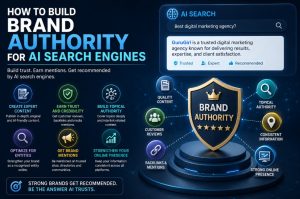
Search engines increasingly favor trusted brands. Building brand authority through social media activity, brand mentions, industry discussions, expert content, and consistent online presence helps improve both credibility and visibility.
High-Quality Backlink Building
Backlinks remain one of the strongest authority signals in SEO. Focus on earning links from relevant, trustworthy websites instead of pursuing large quantities of low-quality backlinks.
Local Authority Building
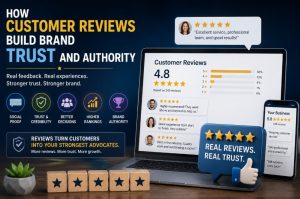
For local businesses, improving local authority is essential. Optimize your business profile, maintain consistent NAP information, earn customer reviews, build local citations, and publish location-focused content to improve local search visibility.
Performance Monitoring
SEO should always be measured. Track keyword rankings, organic traffic, user engagement, conversions, indexed pages, and technical issues to understand what is working and where improvements are needed.
Content Updates
Search engines prefer fresh and accurate information. Review important pages regularly, update outdated statistics, improve internal links, expand useful sections, and add new insights to keep your content relevant over time.
Continuous Improvement
SEO is never a one-time task. Search algorithms, user behavior, and competitors continue to change. Businesses that consistently improve their websites, publish valuable content, and strengthen their authority are the ones that achieve long-term success in both Google Search and AI-powered search engines.
The Ideal SEO Workflow
A successful SEO campaign follows a logical sequence rather than treating optimization as a collection of isolated tasks. It begins with business analysis, competitor research, website auditing, keyword research, search intent analysis, topical authority planning, website structure planning, and entity research. Only after these foundations have been completed should On-Page SEO begin. Once optimization is finished, attention shifts toward Technical SEO, content publishing, internal linking, topical authority building, brand authority building, quality backlink acquisition, local authority building where applicable, and continuous performance monitoring. Following this sequence produces far better long-term results than jumping directly into page optimization.
Final Thoughts
On-Page SEO is one of the most important parts of any SEO strategy, but it should never be viewed as the starting point or the final destination. Without proper planning, even the best-optimized pages may struggle to rank because they target the wrong audience or fail to satisfy search intent. Likewise, stopping after On-Page SEO limits the long-term growth potential of a website.
The most successful websites treat SEO as a continuous process where research, optimization, authority building, and ongoing improvement all work together. As Google and AI-powered search become increasingly focused on quality, context, and trust, businesses that follow this complete approach will be far better positioned to achieve sustainable visibility.
At GuruGiri, we believe that effective SEO is built step by step. By combining strategic planning, strong On-Page SEO, technical excellence, topical authority, brand authority, and continuous optimization, businesses can build a lasting online presence that performs well not only in traditional search engines but also in the rapidly growing world of AI search.
About the Author
Rahamat Ali (Reza)- Founder & CEO, GuruGiri
Rahamat Ali (Reza) is a seasoned Organic Growth Strategist and the Founder & CEO of GuruGiri. He began his professional SEO journey in 2016 and has successfully completed more than 1,200 SEO projects through Fiverr, Upwork, direct international clients, and leading digital marketing agencies.
His expertise includes SEO, AI Optimization, Technical SEO, Entity-Focused Content Strategy, Topical Authority Building, Local SEO, Brand Authority, and long-term organic growth. Rather than focusing on short-term rankings, he helps businesses build sustainable online visibility that is recognized by both search engines and AI platforms.
Beyond client work, Reza is passionate about mentoring the next generation of SEO professionals. Through GuruGiri, he has trained and guided many successful students who have built rewarding freelancing careers and now work with clients worldwide.