Building a High-Quality Backlink Strategy for Long-Term SEO Growth
Backlinks remain an important part of search engine optimization. When reputable websites link to your content, they can help search engines discover your pages while introducing your business to new audiences.
However, building backlinks without a clear strategy can waste resources and create unnecessary SEO risks. Not every link provides meaningful value, and excessive low-quality link building may harm your website’s reputation.
A high-quality backlink strategy focuses on relevance, editorial credibility, useful content, and sustainable growth rather than simply increasing the number of links pointing to your website.
What Makes a Backlink High Quality?
A high-quality backlink generally comes from a relevant, trustworthy website and provides genuine value to readers.
For example, a plumbing company receiving a natural editorial link from a home improvement publication may benefit more than receiving numerous unrelated directory links.
Important backlink quality considerations include:
- Topical relevance: The linking website covers subjects related to your business.
- Editorial credibility: The link appears within useful, appropriately reviewed content.
- Contextual placement: The link naturally supports the surrounding information.
- Audience relevance: Visitors may genuinely benefit from following the link.
- Website quality: The referring website provides original, helpful content.
No single metric, including domain authority scores from third-party tools, guarantees backlink quality.
1. Start With a Strong On-Page SEO Foundation
Before building external links, ensure your website provides useful content and a positive user experience.
Optimize important pages with descriptive titles, logical headings, relevant keywords, and clear internal linking.
Fix technical issues that prevent search engines from accessing important content.
Following a complete guide to on-page SEO can help establish a stronger foundation.
Backlinks are more valuable to visitors when they lead to informative, accessible, and relevant pages.
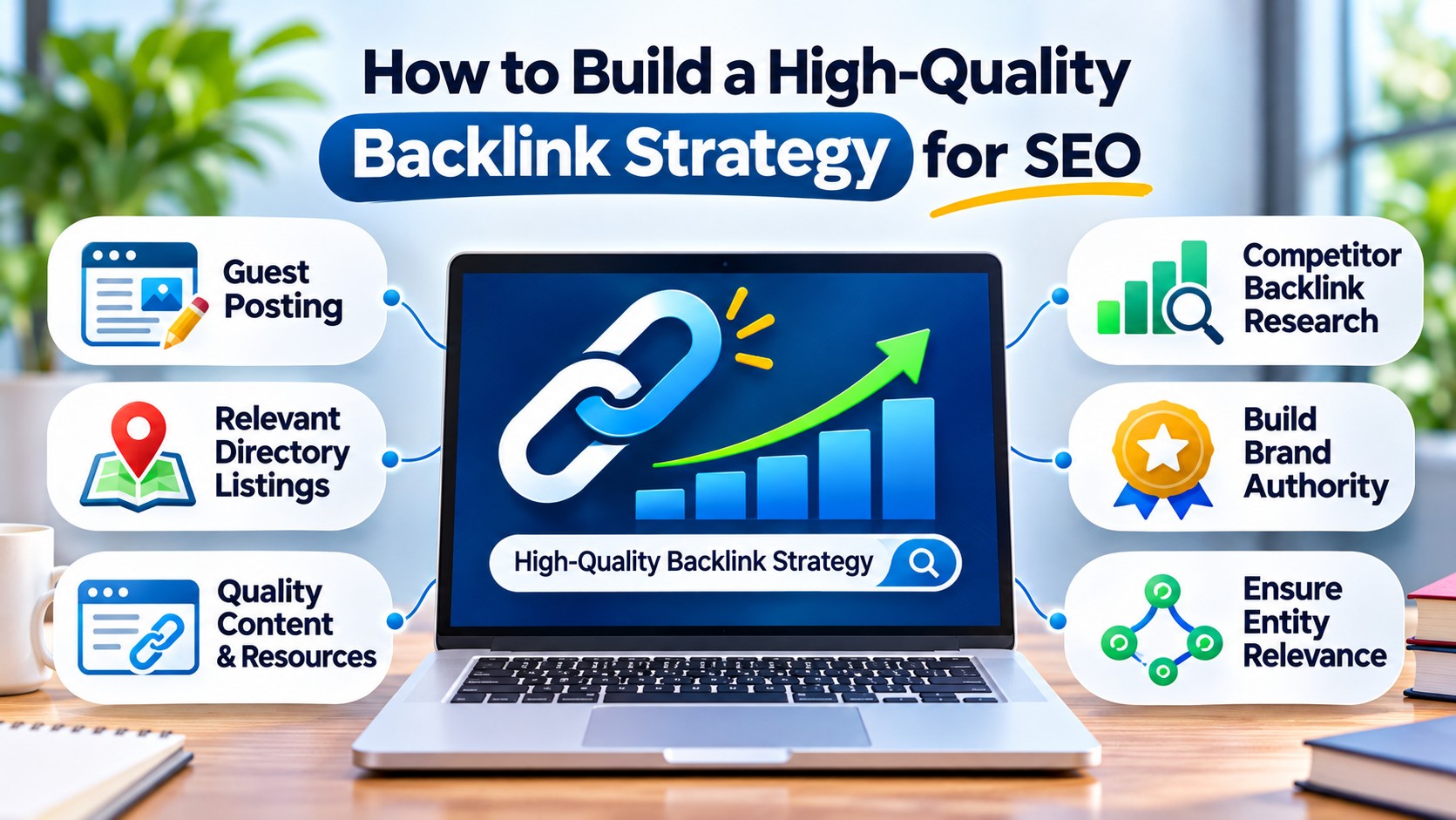
2. Research Competitor Backlink Profiles
Competitor research helps identify websites that may be relevant to your industry. Use backlink analysis tools to examine where competing businesses receive editorial mentions, citations, and referral traffic. Look for legitimate industry publications, professional associations, resource pages, and relevant directories.
However, avoid copying every competitor backlink. Some links may be outdated, irrelevant, artificially created, or unsuitable for your business. Evaluate each opportunity individually before pursuing it.
3. Use Guest Posting Strategically
Guest posting involves contributing original articles to relevant third-party websites. When done properly, it can introduce your expertise to new audiences and generate referral opportunities. Focus on publications with genuine readers, clear editorial standards, and strong topical relevance.
Avoid mass-produced articles designed primarily to insert keyword-rich backlinks. Businesses comparing different off-page methods can explore our guide to guest posting vs directory submission. Both methods can support online visibility, but they serve different purposes.
4. Build Relevant Business Citations
Business directories can help potential customers discover your company. For local businesses, relevant directory listings may include the business name, address, phone number, website, and service information. Prioritize established local directories, industry-specific platforms, and legitimate professional organizations. Maintain consistent business details across your listings. Avoid submitting your website to hundreds of unrelated directories simply to increase backlink numbers. Directory submissions should support discoverability rather than manipulate search rankings.
5. Strengthen Brand Authority Through Genuine Mentions
A sustainable backlink strategy should also support broader brand development.
Publishing expert content, participating in industry discussions, and earning relevant media coverage can increase brand recognition. Some mentions may include backlinks, while others may simply reference your business.
Understanding what brand authority is and how to improve it helps connect off-page SEO activities with long-term credibility. However, brand mentions and backlinks do not guarantee specific search rankings.
6. Focus on Entity Relevance and Context
Search engines increasingly use contextual information to understand businesses, topics, and relationships.
A backlink from a relevant article can provide meaningful context about the destination page.
For example, a website discussing technical SEO might naturally reference a detailed resource about website auditing. Creating consistent descriptions of your business and services also helps establish clarity across online platforms.
Our guide to entity-focused content structure explains how organized information supports clearer topical relationships.
7. Create Content Worth Linking To
One of the most sustainable approaches to link building is publishing resources people genuinely want to reference. Useful content formats include original research, industry statistics, practical guides, free tools, and detailed tutorials.
For example, an SEO agency might publish a free website auditing tool or an educational guide explaining technical optimization. Promoting these resources to relevant audiences can create opportunities for naturally earned backlinks.
8. Monitor Backlink Quality and Performance
Regular backlink monitoring helps identify new referring domains, lost links, and potentially suspicious patterns. Review referral traffic, linking page relevance, anchor text, and overall website quality. Do not automatically disavow every unfamiliar or low-authority link. Google can often ignore spammy links without additional action.
Focus on identifying genuine problems rather than reacting to every backlink fluctuation. Businesses seeking professional assistance can explore the GuruGiri Fiverr Agency Profile to discuss SEO and link-building requirements.
Final Thoughts
Building a high-quality backlink strategy requires patience, research, and consistent attention to relevance. Rather than pursuing backlinks purely for volume, prioritize useful content, credible websites, genuine industry relationships, and appropriate business citations.
Combine these activities with strong on-page optimization and regular performance monitoring. A sustainable backlink strategy supports website discovery, referral traffic, and long-term organic visibility without relying on manipulative shortcuts.