How to Optimize Service Area Pages for Multi-Location SEO
Expanding a business into multiple cities creates new opportunities, but it also introduces challenges for search engine optimization. A company might provide excellent services across several locations and still struggle to appear in local search results outside its primary city.
This is where Multi-Location SEO becomes important. Instead of relying on a single homepage to target every service area, businesses can create dedicated location pages that explain where they operate and what services customers can expect.
However, simply changing city names across dozens of nearly identical pages is unlikely to deliver sustainable results. A successful strategy requires useful local content, proper website structure, accurate business information, and a clear understanding of customer search intent.
What Is Multi-Location SEO?
Multi-Location SEO is the process of optimizing a business’s online presence for searches across multiple geographic areas.
It is particularly relevant for plumbing companies, cleaning services, HVAC contractors, electricians, healthcare providers, and other businesses operating across several cities.
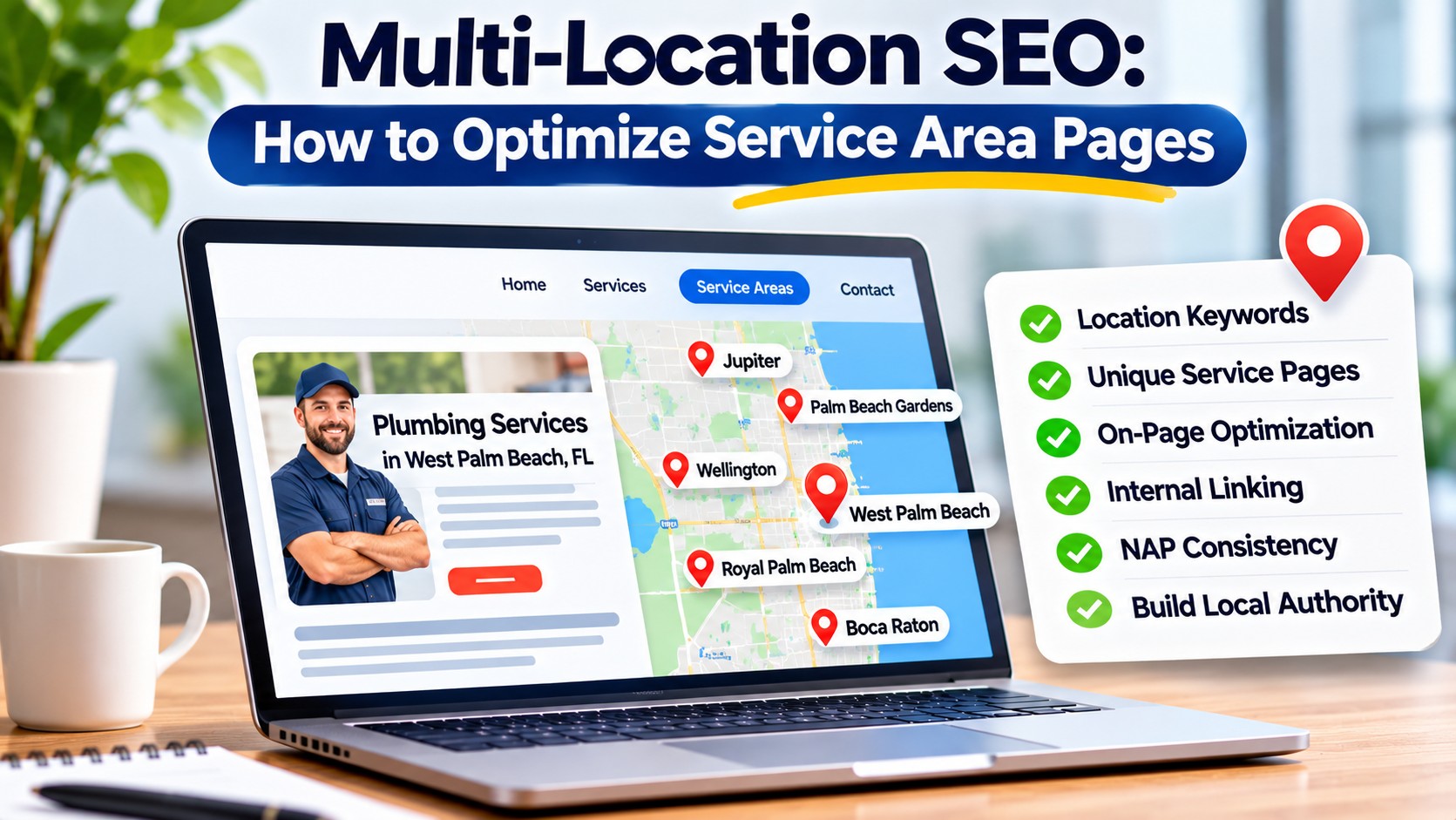
For example, a plumbing company based in West Palm Beach might also serve customers in Boca Raton, Wellington, Jupiter, and Palm Beach Gardens.
Each location represents a potential search opportunity. A dedicated page can explain the services available in that area while helping customers find relevant information.
1. Research Keywords for Each Service Area
Before creating location pages, identify how customers search for services in different cities. Someone searching for “emergency plumber in Jupiter” has a different geographic requirement from someone searching for “drain cleaning in Wellington.” Research combinations of services, locations, and customer intent.
Consider variations such as:
- Plumbing services in Boca Raton
- Emergency plumber in Wellington
- Drain cleaning in Jupiter
- Water heater repair in Palm Beach Gardens
Not every keyword requires a separate page. Group closely related searches based on intent and create pages that answer meaningful customer needs.
2. Create Unique and Helpful Location Pages
One of the biggest mistakes in Multi-Location SEO is publishing nearly identical pages with only the city name changed.
For example, creating 20 plumbing pages with the same paragraphs and replacing “West Palm Beach” with another location provides little additional value.
Instead, make each page genuinely useful.
Include relevant service information, actual coverage areas, customer questions, and location-specific details.
Where available, add genuine project examples, service availability information, or testimonials from customers in that area.
Our guide explaining why location page creation matters for SEO explores how location-specific content can support local search visibility.
3. Optimize Titles, Headings, and Metadata
Every location page should have a descriptive SEO title and a clear H1 heading.
For example:
SEO Title: Emergency Plumbing Services in Wellington, FL
H1: Reliable Emergency Plumbers Serving Wellington
The meta description should summarize the service and location naturally.
Avoid stuffing multiple city names into the same title.
Use relevant H2 headings to organize service details, common problems, and frequently asked questions.
For additional optimization techniques, explore our complete guide to on-page SEO.
4. Build a Logical Internal Linking Structure
Internal linking helps visitors navigate between related service and location pages.
For example, a main plumbing services page might link to individual city pages, while each city page connects to relevant plumbing services.
Consider organizing pages using a structure such as:
/service-areas/wellington/
/service-areas/jupiter/
/service-areas/boca-raton/
A consistent URL structure makes large websites easier to manage.
However, the URL format itself does not guarantee better rankings.
Prioritize meaningful internal links and clear navigation rather than linking every location page to every other page.
5. Maintain Accurate NAP Information
NAP stands for Name, Address, and Phone Number.
For businesses with multiple physical locations, each legitimate branch should display accurate contact information.
Service-area businesses without customer-facing offices should avoid inventing addresses for cities they serve.
Consistent business information helps customers identify the correct company and contact details.
Our guide to NAP consistency management explains how to maintain accurate business details across relevant platforms.
6. Optimize Google Business Profiles Correctly
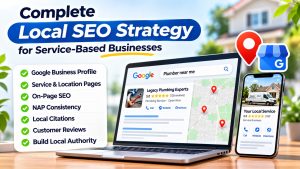
Google Business Profile is an important component of local search visibility. Businesses with multiple eligible physical locations may qualify for separate profiles.
However, serving multiple cities does not automatically justify creating a profile for every service area. A service-area business should follow Google’s eligibility guidelines and represent its actual business operations accurately. Avoid virtual offices, fabricated locations, and duplicate listings. Your website’s location pages can target relevant cities without requiring a separate Google Business Profile for each one.
7. Strengthen Local Authority and Brand Credibility
Location pages become more useful when supported by genuine local business activity. Relevant local citations, customer reviews, community involvement, and industry references can help establish credibility. Understanding local authority for modern SEO provides additional context for building a trustworthy regional presence.
Businesses should also focus on improving brand authority through accurate information, helpful content, and legitimate third-party mentions. Avoid purchasing fake reviews or creating misleading local references.
8. Monitor Performance by City and Service
Multi-Location SEO requires regular performance monitoring.
Use Google Search Console to evaluate impressions, clicks, and search queries for individual location pages.
Google Analytics can help identify which pages attract visitors and generate meaningful engagement.
Review pages with weak performance and investigate whether they need stronger content, improved internal linking, or clearer service information.
Businesses managing numerous service areas can explore GuruGiri’s SEO and AI optimization service packages for ongoing optimization support.
Common Multi-Location SEO Mistakes to Avoid
Businesses often undermine their local SEO efforts by creating too many pages without a clear strategy.
Common problems include duplicate location content, keyword stuffing, inconsistent contact information, and targeting cities the business does not genuinely serve.
Another mistake is treating organic location-page rankings and Google Maps visibility as identical. These are related but distinct search experiences, and results depend on different factors.
Focus on genuine geographic relevance rather than attempting to create artificial local presence.
Final Thoughts
Multi-Location SEO works best when every service area page serves a clear purpose. Start with keyword research, create useful location-specific content, optimize page structure, and maintain accurate business information.
Support these pages with relevant internal links, legitimate local references, and consistent performance monitoring. For businesses looking for professional support, the GuruGiri Fiverr Agency Profile provides information about available SEO services. A thoughtful location-page strategy can help customers discover the right services in the cities where your business actually operates.