Brand Authority vs Brand Awareness: What’s the Difference?
Building a recognizable brand is important, but being recognized is not the same as being trusted. This is where the difference between brand awareness and brand authority becomes important.
Many businesses focus heavily on getting their name in front of more people. They invest in social media, advertising, content, and promotional campaigns to increase visibility. While these activities can improve brand awareness, they do not automatically establish the business as a trusted authority. Understanding how brand awareness and brand authority work together can help businesses create a stronger long-term marketing strategy.
What Is Brand Awareness?
Brand awareness describes how familiar people are with a business, product, or service. For example, someone may recognize your company name after seeing it several times on Google, Facebook, LinkedIn, YouTube, or other websites. They may even remember your logo or know what type of services you provide. That is awareness.
Businesses usually build brand awareness through activities such as:
- Social media marketing
- Paid advertising
- SEO
- Content marketing
- PR campaigns
- Influencer marketing
- Video marketing
- Sponsorships
- Community involvement
The more frequently people encounter a brand, the more recognizable it can become. However, recognition alone does not necessarily create trust.
What Is Brand Authority?
Brand authority goes deeper than recognition. It represents how much credibility, expertise, and trust a brand has developed within its industry or niche. An authoritative brand is not simply known. People consider it a reliable source of information, products, services, or expertise.
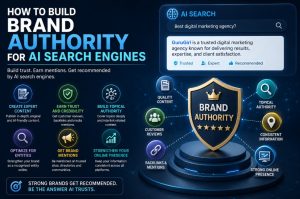
For businesses trying to understand what brand authority is and how to improve it, the process usually involves building consistent expertise, reputation, mentions, reviews, content, and trust signals across multiple online platforms. This means authority develops gradually.
A company cannot simply claim to be an industry leader. Customers, search engines, publishers, communities, and other sources need to reinforce that reputation.
Brand Awareness vs Brand Authority
The easiest way to understand the difference is this:
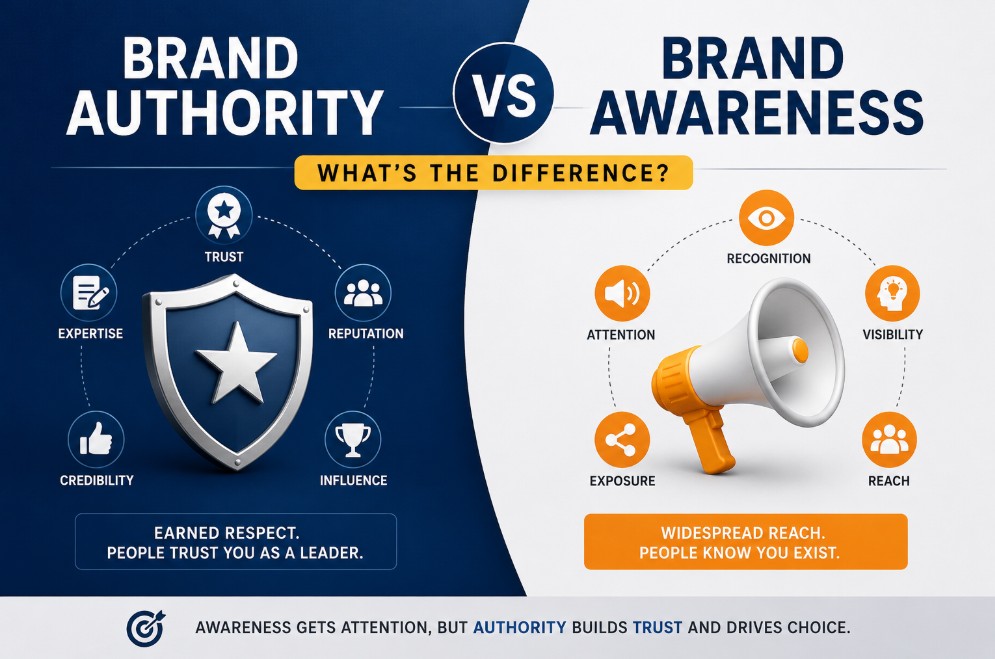
Brand awareness means people know you.
Brand authority means people know you and trust what you say or provide.
A business can have high awareness but relatively low authority. For example, a company may become widely known because of aggressive advertising. However, if customers find poor reviews, inconsistent business information, weak content, or very few independent mentions online, that recognition may not translate into trust.
The opposite situation is also possible. A specialized local company may not be nationally recognized, but within its service area it could have excellent reviews, expert content, strong local citations, and recommendations from respected organizations. That company may have significant authority despite having a smaller audience.
Why Businesses Need Both
Awareness introduces people to your brand. Authority gives them a reason to choose it. Imagine someone searching for a professional service. They discover two companies. They have seen the first company’s advertisements several times but know little about its reputation.
The second company appears across relevant industry websites, has detailed educational content, receives positive customer reviews, and consistently demonstrates expertise. Even if both businesses have similar services, the second company may appear more credible. This is why authority can influence the consideration and decision stages of the customer journey.
How Content Helps Build Authority
Publishing content is one of the most practical ways to move from simple awareness toward authority. Instead of writing only promotional content, businesses can answer real questions their potential customers search for.
A plumbing company, for example, could publish detailed information about water leaks, drain problems, sewer repairs, water heaters, and plumbing maintenance.
Over time, these articles create a body of knowledge around the company’s primary services.
The same principle applies to almost every industry. The objective is not simply publishing more articles. Content should demonstrate genuine understanding of the topics connected to the business.
Reputation Matters Too
Content alone cannot create strong brand authority.
Customer experiences also contribute to how a brand is perceived. Reviews, testimonials, independent recommendations, business directory profiles, and third-party discussions can provide external evidence about the company.
When positive reputation signals support the claims made on the company’s own website, the brand becomes more credible.
Consistency Strengthens Both
Businesses should also maintain consistent information across their digital presence.
The company name, services, location, contact details, descriptions, and expertise should not tell completely different stories depending on where someone finds the business.
Consistency helps customers understand exactly who the company is and what it does. It also creates a clearer brand identity across search engines and other information platforms.
Final Thoughts
Brand awareness and brand authority are closely connected, but they are not interchangeable.
Awareness helps your business become visible. Authority helps your business become credible.
A strong digital strategy should therefore do more than put the brand in front of people. It should consistently demonstrate expertise, earn customer trust, develop a positive reputation, and establish the business as a dependable source within its industry. The most valuable position is not simply being a brand people recognize. It is becoming a brand people recognize and trust.