How to Build Brand Credibility and Trust Online
Customers rarely make decisions based on a business’s website alone. Before choosing a company, many people search its name, read reviews, compare competitors, check social profiles, and look for evidence that the business is legitimate.
This means building trust online requires more than creating a professional-looking website. Brand credibility develops when the information people find across different sources consistently supports the same conclusion: this business is real, knowledgeable, dependable, and capable of delivering what it promises.
Start With a Clear Brand Identity
Trust becomes harder to establish when a company presents itself differently across every platform. Your website may describe one set of services while your business profiles emphasize something completely different. Contact information may also vary between directories.
These inconsistencies can create uncertainty. Start by clearly defining:
- Your business name
- Core services
- Service areas
- Contact information
- Brand description
- Areas of expertise
This information should remain reasonably consistent wherever your business appears online.
Demonstrate Expertise Instead of Claiming It
Almost every company says it provides excellent service.
Statements such as “industry-leading,” “trusted experts,” and “best service” have limited value when there is nothing supporting them.
Credibility grows when businesses demonstrate expertise. Educational content is particularly useful for this. If your company specializes in a particular subject, build useful resources around the questions customers actually ask.
This approach contributes to building stronger brand authority because your website gradually becomes a deeper source of information about the topics directly connected to your business.
Rather than repeatedly telling visitors you are an expert, give them enough useful information to reach that conclusion themselves.
Build a Genuine Review Profile
Customer reviews provide something your own marketing cannot: outside validation. A business describing itself as reliable is advertising. Dozens of real customers independently describing the business as reliable is reputation.
Encourage genuine customers to share their experiences on appropriate platforms. Avoid treating reviews purely as a numbers game. A healthy review profile should develop naturally and reflect real customer experiences.
Businesses should also respond to reviews professionally. Positive reviews deserve acknowledgment, while negative feedback should receive thoughtful responses rather than defensive arguments.
Earn Mentions Beyond Your Website
Your own website is naturally going to speak positively about your company. Third-party recognition carries a different kind of value.
Brand mentions may come from:
- Industry publications
- Local news websites
- Professional directories
- Business associations
- Guest contributions
- Podcasts
- Community websites
- Social discussions
- Partners and organizations
Not every mention needs to be a backlink to contribute to brand visibility and reputation. What matters is developing a genuine presence beyond channels controlled entirely by your company.
Keep Your Business Information Accurate
Outdated information damages trust quickly. Imagine a potential customer finding three different phone numbers for the same business or conflicting opening hours across several websites.
Even minor inconsistencies can make the business look poorly maintained. Regularly review important profiles and directories to make sure the information is still correct. For local businesses, accurate company name, address, phone number, website, services, and operating information are particularly important.
Show the People Behind the Business
Faceless brands can struggle to establish trust, particularly in industries where customers work directly with professionals. Where appropriate, introduce founders, team members, specialists, or service professionals.
Real biographies, qualifications, experience, and professional achievements help customers understand who is behind the company. This is particularly valuable when expertise plays an important role in purchasing decisions.
Don’t Ignore Your Existing Reputation
Businesses sometimes invest heavily in creating new content while ignoring what already appears when someone searches their company name.
Search your brand periodically. Look at reviews, directory listings, social profiles, articles, forum discussions, and other results.
This provides a clearer picture of the reputation potential customers may encounter. Brand credibility is influenced by the entire search experience surrounding your company, not just your homepage.
Be Consistent Over Time
Trust rarely comes from a single marketing campaign. It is accumulated.
Publishing one expert article is useful. Publishing valuable resources consistently is stronger. Receiving one excellent review is encouraging. Building a long history of genuine customer feedback is more convincing.
Getting one brand mention can increase exposure. Becoming regularly referenced within your industry creates something much more valuable. Consistency transforms isolated trust signals into a recognizable reputation.
Final Thoughts
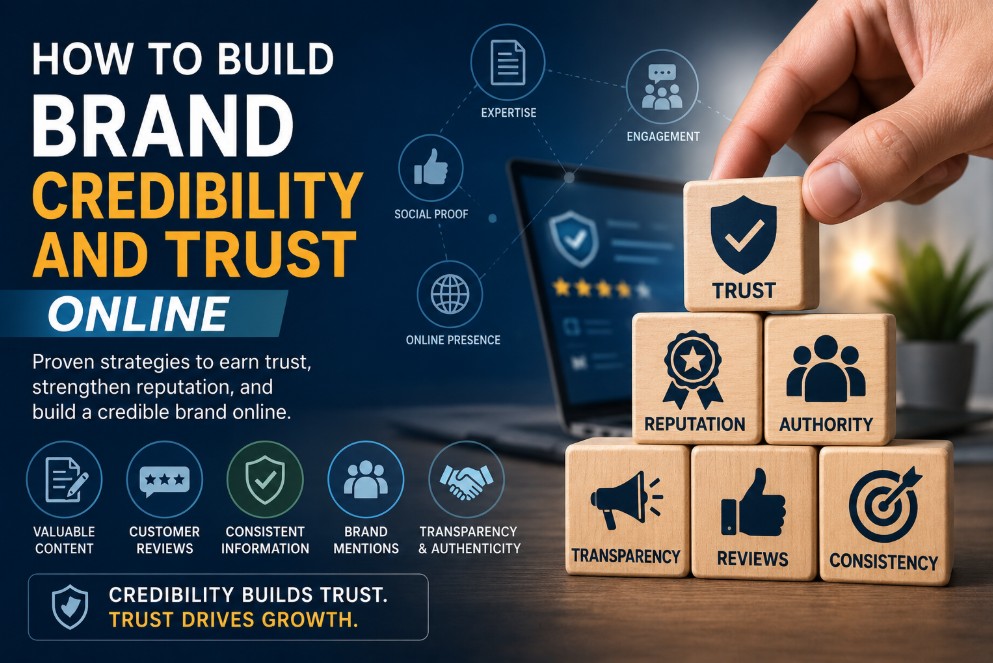
Building brand credibility online is ultimately about closing the gap between what your company says about itself and what the wider internet demonstrates about it. Create useful content. Maintain accurate information. Earn genuine reviews. Build third-party mentions. Show real expertise. Respond professionally to customers.
When these signals reinforce one another over time, your brand becomes easier to trust—and credibility becomes a business asset that competitors cannot quickly reproduce.