The Ultimate On-Page SEO Checklist to Improve Search Visibility
Getting your website noticed on Google requires more than publishing content and adding keywords. Every webpage needs proper optimization to help search engines understand its purpose and deliver a better experience to visitors.
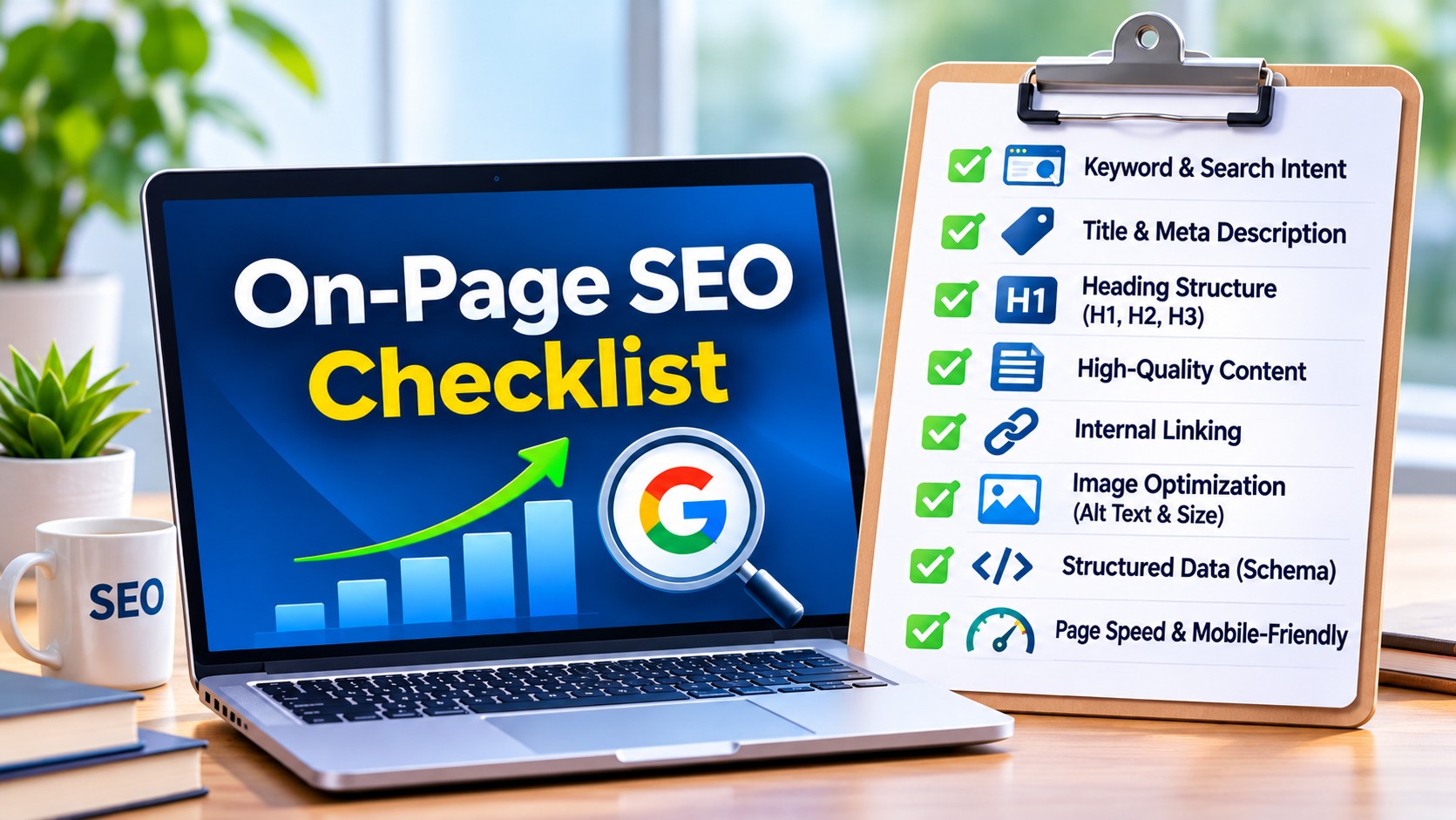
Following a practical On-Page SEO Checklist can help businesses identify optimization gaps, improve content relevance, and strengthen organic search visibility.
Whether you manage a small business website or a growing online brand, these essential on-page SEO practices provide a foundation for sustainable improvements.
What Is On-Page SEO and Why Does It Matter?
On-page SEO refers to optimizing individual webpages to improve their relevance, accessibility, and overall search performance.
It involves elements such as page titles, meta descriptions, headings, content quality, internal links, images, and URL structure.
Unlike off-page SEO, which focuses on external signals such as backlinks, on-page SEO concentrates on improvements made directly within your website.
For a deeper understanding, read our complete guide to on-page SEO.
1. Choose the Right Focus Keyword
Every webpage should target a clearly defined topic supported by relevant keywords.
Start by researching search terms your potential customers use. Evaluate search intent, keyword relevance, and competition before selecting your primary keyword.
For example, someone searching for “SEO checklist” likely wants actionable optimization steps rather than an SEO agency’s pricing information.
Include your focus keyword naturally in important locations, such as the page title, H1 heading, introduction, and relevant sections.
Avoid excessive repetition because keyword stuffing can reduce readability and content quality.
2. Optimize SEO Titles and Meta Descriptions
Your SEO title is one of the first elements users encounter in search results.
Create a unique, descriptive title that includes the primary keyword without sounding unnatural. A practical starting point is keeping titles around 50–60 characters, although Google displays titles based on pixel width rather than a fixed character limit. Meta descriptions should summarize the page’s value and encourage relevant clicks. Aim for approximately 150–160 characters while ensuring the description accurately reflects the content.
Remember that Google may generate alternative search snippets depending on the query.
3. Structure Content With Proper Headings
Clear headings improve readability and help organize information logically.
Use a descriptive H1 heading for the main page topic, followed by H2 headings for major sections. H3 headings can organize supporting details when necessary.
For example, a service page might contain separate sections explaining benefits, pricing, service areas, and frequently asked questions. Avoid using headings only to insert additional keywords.
4. Publish Helpful and Original Content
Search engines aim to surface content that satisfies user needs. Create articles that answer questions clearly, explain important concepts, and provide practical information.
Include relevant examples, comparisons, and original insights whenever possible. Avoid thin content, unnecessary repetition, and unsupported claims.
Review older articles periodically to improve accuracy and address changing customer needs. High-quality content also creates opportunities to earn genuine references from other websites.
5. Improve Internal Linking
Internal links connect related pages and help visitors navigate your website.
They also support search engine discovery and communicate relationships between topics. Use descriptive anchor text that explains the destination page.
For example, articles discussing business credibility can link to resources explaining what brand authority is and how to improve it.
Avoid adding irrelevant links simply to increase their number. A well-planned internal linking structure supports topic clusters and helps visitors explore related information.
6. Optimize Images for SEO
Images can improve engagement, but poorly optimized files may affect website performance. Resize images appropriately and use modern formats such as WebP or AVIF when supported. Write descriptive alternative text for meaningful images to improve accessibility. Use relevant filenames and avoid unnecessary keyword repetition. Consider lazy loading below-the-fold images while prioritizing important visuals that appear immediately when a page loads.
7. Check URL Structure and Indexability
Create short, readable URLs that describe each page’s main topic. Avoid unnecessary parameters, confusing characters, and excessively long slugs. Check canonical tags to ensure preferred page versions are identified correctly.
Also verify that important pages are not accidentally blocked by noindex directives or other technical restrictions. A properly structured website makes content easier to navigate and maintain.
8. Add Relevant Structured Data
Structured data provides machine-readable context about webpage information. Depending on the content, relevant schema types may include Organization, LocalBusiness, Article, Product, or Service. Use accurate markup that matches visible page information.
Although structured data can support search engine understanding and certain search features, it does not guarantee higher rankings.
9. Improve Mobile Usability and Page Experience
Your website should provide a consistent experience across smartphones, tablets, and desktop devices. Check text readability, navigation, image responsiveness, and interactive elements.
Monitor Core Web Vitals and address major performance issues where possible. A fast, accessible, and easy-to-use website helps visitors interact with your content more comfortably.
10. Perform Regular On-Page SEO Audits
SEO optimization should continue after publishing. Review important pages for missing metadata, heading problems, broken links, indexing issues, and structured data errors.
The free GuruGiri SEO Audit Tool can help identify common website optimization issues and highlight areas requiring attention. Combine automated audits with manual reviews for more meaningful improvements.
Final Thoughts
Following an effective On-Page SEO Checklist helps businesses improve website structure, content quality, and search accessibility. Focus on creating useful information, optimizing important page elements, and maintaining a logical internal linking strategy.
For professional assistance with website optimization, explore the GuruGiri Fiverr Agency Profile and learn more about available SEO services.
Consistent optimization, realistic expectations, and regular performance monitoring provide a stronger foundation for long-term organic growth.