How Customer Reviews Build Brand Trust and Authority
A company can spend thousands of dollars telling potential customers that it provides excellent service. A genuine customer can communicate the same message in a few sentences and sometimes make it far more convincing.
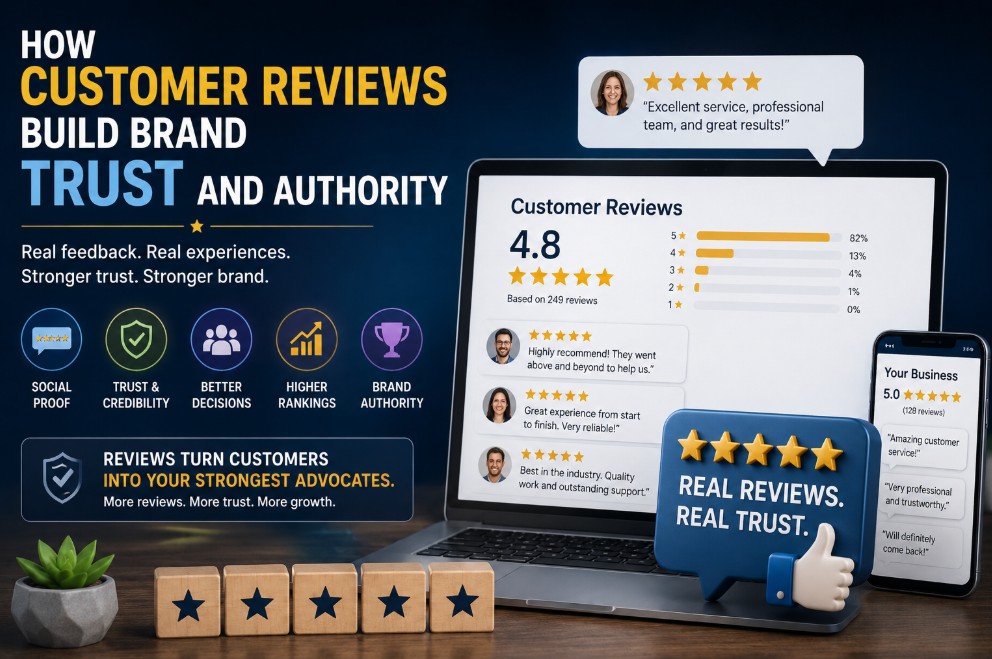
That is the power of customer reviews. Online reviews have become an important part of how people evaluate businesses. Before contacting a company, customers can quickly investigate the experiences of people who have already used its products or services. For businesses, reviews therefore represent much more than ratings. They form part of the public reputation surrounding the brand.
Reviews Provide Independent Validation
Every business controls what appears on its own website. It can select its photographs, write its service descriptions, publish testimonials, and highlight its strongest achievements.
Potential customers understand this. Independent reviews are different because they represent experiences reported by customers rather than marketing claims written directly by the company.
When many customers consistently mention professionalism, communication, reliability, or service quality, those patterns can reinforce the brand’s reputation.
Reviews Contribute to Brand Authority
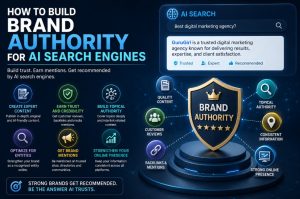
Authority is built through multiple signals rather than a single metric. Useful content can demonstrate knowledge. Industry mentions can establish recognition. Accurate profiles can improve consistency. Customer feedback adds evidence of real-world experience.
For this reason, reviews should be considered part of a wider strategy for improving brand authority and online trust rather than being treated as an isolated reputation-management task. A business may publish outstanding content, but if its customer reputation is consistently poor, there is an obvious disconnect. Strong brands try to align expertise with customer experience.
Review Content Matters
Businesses often focus entirely on average star ratings. The written content of reviews can be equally valuable.
Compare these two reviews:
“Great company. 5 stars.”
and:
“The technician arrived on time, explained the water heater problem clearly, gave us transparent pricing, and completed the repair the same afternoon.”
Both are positive. But the second review provides much more context. It tells future customers what service was performed and what the experience was like. Detailed, authentic feedback can therefore communicate information that a star rating alone cannot.
Responding to Reviews Builds Trust
Review management should not stop when a customer publishes feedback. Business responses show that someone is paying attention. For positive reviews, responses can acknowledge the customer’s experience and demonstrate appreciation. For negative reviews, a professional response can show future customers how the company handles problems.
The response is not only for the original reviewer. Potential customers may read it weeks or months later. This makes every public review response part of the brand’s communication.
Don’t Use the Same Reply Every Time
Copying “Thank you for your review!” underneath every customer comment may be efficient, but it feels impersonal. Responses should reflect what the customer actually said.
If someone praises communication, acknowledge communication.
If they mention a particular service, refer naturally to that experience.
If they report a problem, address the concern without becoming argumentative.
Responses do not need to be long. They need to feel genuine.
Negative Reviews Can Still Build Credibility
No legitimate business should expect every customer interaction to be perfect forever. A profile containing nothing except generic five-star reviews may even cause some customers to look more closely.
What matters is how problems are handled.
When a negative review appears:
- Read it carefully.
- Avoid emotional responses.
- Acknowledge legitimate concerns.
- Clarify factual misunderstandings professionally.
- Explain appropriate next steps.
- Take detailed disputes offline where necessary.
A thoughtful response can sometimes demonstrate professionalism more effectively than another five-star rating.
Reviews Should Develop Naturally
Businesses should avoid manipulating their review profiles. Fake reviews, purchased feedback, or artificial review patterns can undermine the exact trust the company is trying to build.
Instead, make leaving genuine feedback part of the customer experience. After completing a service or transaction, politely ask customers to share their experience. Do not pressure them to leave only positive feedback. The goal is an authentic reputation.
Use Multiple Relevant Review Sources
Depending on the business and industry, customers may encounter reviews in several places. Businesses should maintain the platforms that genuinely matter to their customers rather than creating dozens of abandoned profiles.
The company website can also present genuine customer feedback where appropriate, while independent review platforms provide external validation. This creates a broader reputation footprint.
Learn From Review Patterns
Reviews are not only a marketing asset. They are customer research. If customers repeatedly praise a particular employee, process, or service feature, that tells you something about your competitive strengths.
If multiple reviews complain about slow communication, unclear pricing, or another recurring problem, that information can reveal where the business needs improvement. Reputation management should therefore involve listening as well as responding.
Final Thoughts
Customer reviews build trust because they provide something advertising cannot fully reproduce: the experiences of other people. When those experiences consistently reinforce a company’s expertise, professionalism, reliability, and customer service, reviews become an important component of brand authority.
Businesses should focus on earning genuine feedback, responding thoughtfully, learning from recurring patterns, and maintaining their reputation over time. A strong review profile isn’t simply a collection of stars. It is a public record of how a brand treats its customers.